
PUFFIN PICTURE BOOKS
THEIR CONTRIBUTION TO INFORMATION IN BOOKS

 |
NOEL CARRINGTON Manchester 1992 |
GENERAL
|
MECHANICAL |
|
NATURE 01 |
|
NATURE 02 |
|
HOBBIES |
|
COMMUNICATIONS |
|
HISTORY |
|
COMMODITY |
|
RUSSIAN INFLUENCES |
INDIVIDUAL ILLUSTRATORS (indicative selections)
A
|
The Story of Plant Life, Isobel Alexander, 1950 |
B
|
Early Man, John Baynes, 1950 |
|
Farm Crops in Britain, S.R.Badmin 1955 |
|
Village and Town, S.R.Badmin |
|
Trees in Britain, S.R.Badmin |
|
The Arabs, Edward Bawden |
|
Book of Swimming, Janet Bassett-Lowke |
C
|
The Theatre at Work, James Cleaver, 1947 |
|
Wild Animals in Britain, Paxton Chadwick, 1948 |
|
Wild Flowers , Paxton Chadwick, |
|
A Book of Trains, F.E.Courtney 1951 |
|
Butterflies of Britain, Richard Chopping |
|
Lo Cheng wouldn't sit still, Chaing Yee |
|
The Story of Ming the Panda, Chaing Yee |
D
|
Waterways of the World, Laurence Dunn 1950 |
|
A Book of Ships, Laurence Dunn |
|
Country Holiday, Leo Dowd |
|
Woodworking for Children , John Dumayne |
E
F
|
Birds of the Village, James Fisher |
G
|
On the Farm, James Gardner |
H
|
The Tale of Noah and the Flood,Clarke Hutton 1946 |
|
The Magic of Coal, Peggy Hart |
|
Animals of Australia, Sheila Hawkins |
|
The Story of Tea, Clarke Hutton |
J
|
Animals of the Countryside, Arnrid Johnston, 1944 |
|
Animals of North America, Arnrid Johnson 1950 |
|
Wonders of Sea Life, P.Jeremy, 1946 |
|
The Story of China, Carolin Jackson 1945 |
K
|
Mountain and Moorland Birds, Talbot Kelly |
L
|
About a Motor Car, Phyllis Ladyman, 1965 |
|
The Buildings of Ancient Egypt, the Leacrofts 1954 |
|
Churches and Cathedrals,the Leacrofts, 1957 |
M
|
Fireworks and Fetes, W.Murray 1946 |
|
The Story of Iron, P.Mann,1948 |
|
The Human Body, Ian Morison |
|
A Book of Rigmaroles, Enid Marks |
|
Famous Ships, Frank Mason |
|
Locomotives , Paul B Mann |
N
O
P
|
Electrical Models from Odds and Ends, Gohm and Patterson, 1949 (a selection) |
|
Seashore Life, Peter Parks 1965 (a selection) |
|
Wonders of Animal Life,Erna Pinner, 1945 |
|
Pond and River Life, Brynhild Parker |
|
A History of the Countryside, Margaret and Alexander Potter |
Q
R
|
English Fashion, Victor Ross c1947 |
|
Mary had a Little Lamb, H.A.Rey, 1951 |
S
|
Airliners, John Stroud |
|
Insect Life, Arthur Smith, 1950 |
|
Butterflies, Vernon Shearer, 1961 |
|
Mitla and Lupe,Jose Sancha , 1948 |
|
Signs and Symbols, Pallant Sidaway |
T
|
Birds of the Estuary, C.F.Tunnicliffe 1952 |
|
Discovery of the Poles , Richard Taylor |
|
The Clothes We Wear , Jack Townend |
U
V
|
Fish and Fishing, Bernard Venables, 1948 |
W
|
Zoo Animals, Maurice Wilson 1948 |
|
Sailing Ships, Archie White |
|
How Planes Fly, "Wren" |
X
Y
Z
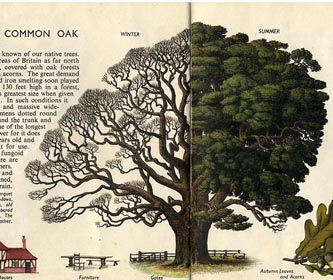
In 1984 I interviewed Geoffrey Smith of the printing firm of W.S.Cowell's of Ipswich. He had long since retired as CEO and was living in his farm in Suffolk. Cowell's had established a considerable reputation as an initiator of fine mass-produced lithographic illustrated books for children and I wanted to find out about how a company, first associated in the nineteenth century with the printing of lottery tickets, had come to be associated with School Prints, Orlando the Cat and Puffin Picture Books. I had read in several publications that the artist had drawn directly on the plate, and that this plate was sometimes referred to as 'Plastocowell'. The notes beneath are largely from memory. I am grateful for any corrections you can suggest in matters of fact. The examples I have chosen are from my own collection. I have divided the titles under into seven headings, each of which seemed to generate different opportunities for the artist and designer. In his shaping of the product, it was said that Allen Lane was influenced by cheap, mass-produced books for children from the Soviet Union. I attach four examples for your consideration. I have tried to show the overall cover concept, and one interior page spread, 17.5 x 22cms for each single page. The editorial layout permits catalogues of images and deployments of text, but also, in the centre spread of each book, a rare opportunity to make some panoramic visual statement on the book's subject matter. Covers were mainly in a card slightly heavier than the paper, but on occasions, the book was given much stiffer card as a cover. The illustrators were uniformly skilled and innovatory. This collection is intended as a celebration of their skills and dedication in the service of information for children. Some time before my interview, I had discovered from a local book dealer that much of the Cowell's archive had been put in skips and burnt, not even sold to the antiquarian trade. I understood that a Visitor's Book with art work, signatures and much historical interest had gone into the flames. The literature about mass produced picture books for children, and the role that lithography played is however well documented, not least in the Penrose Annual. |
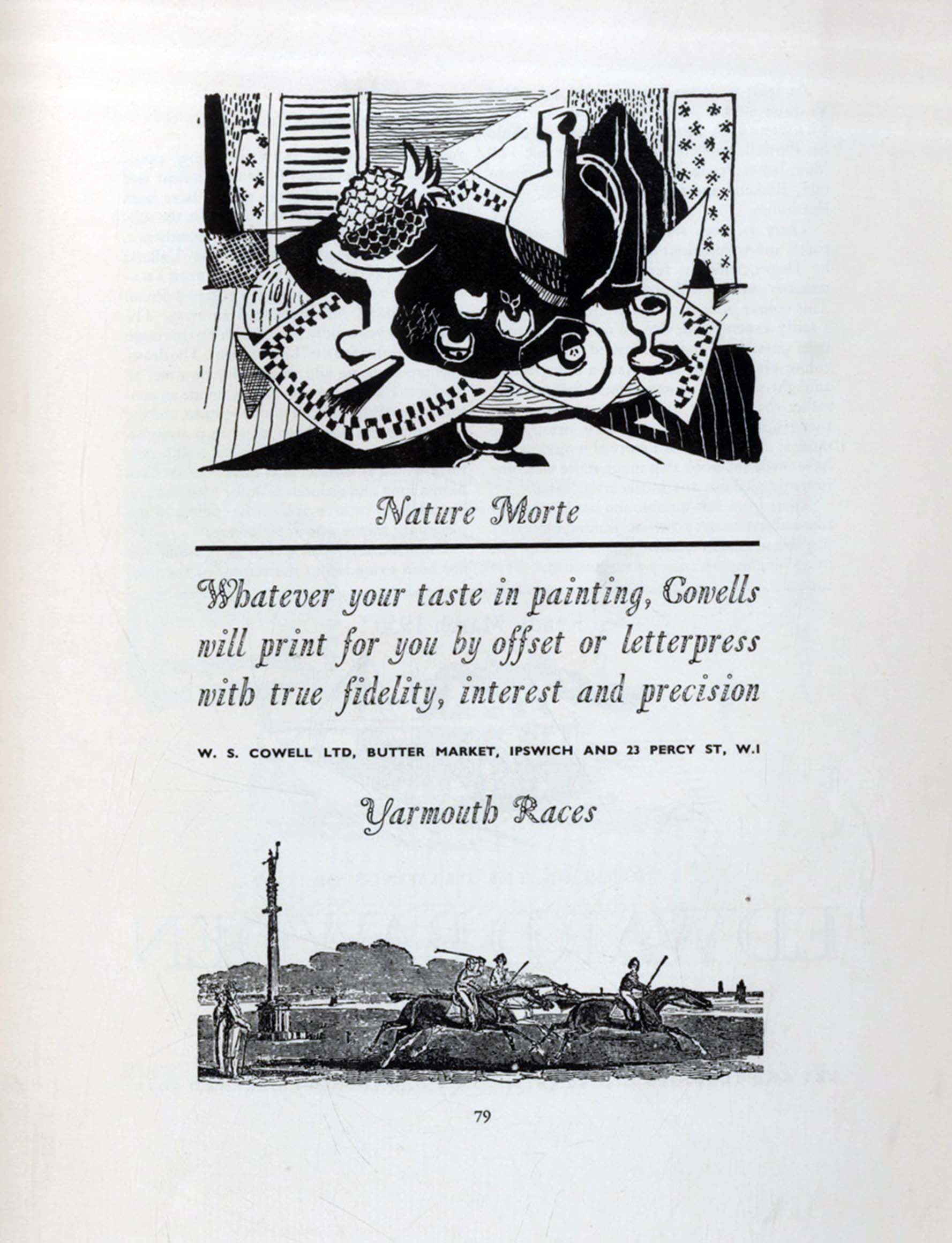
COWELL'S OF IPSWICH
back